
Does the U.S. produce more oil than Russia and Saudi Arabia?
As oil tankers largely sit stranded in the Strait of Hormuz, President Donald Trump has boasted about the United States’ role as an oil superpower.
“We are right now producing more oil than Saudi Arabia and Russia combined,” he said at an April 23 White House event to announce a ceasefire between Israel and Lebanon. He made similar statements on March 26 (twice), April 12 (twice), April 13, April 16 and April 17.
He’s right, but with a caveat: The United States’ oil production advantage is built on commodities that won’t power vehicles.
Specifically, the United States leads Russia and Saudi Arabia combined when comparing the nations’ crude oil production combined with other liquids such as ethane, propane and butane. This is a common way of making such comparisons, experts told PolitiFact.
Looking only at crude oil — the commodity that is turned into gasoline for vehicles — Russia and Saudi Arabia collectively outpace the U.S. in production.
When we asked the White House for Trump’s evidence, a spokesperson responded, “The United States is the world’s largest oil producer, and thanks to (President Trump’s) energy dominance agenda, oil production has hit record highs.”
Measuring crude oil and other liquids
When we inquired with the Energy Department, a spokesperson shared a screenshot of a summary chart from the federal Energy Information Administration covering the production of crude oil and natural gas liquids. Information in the chart matches what’s in the agency’s database.
The data in the chart is broad. It includes not only crude oil but also natural gas liquids — which include ethane, propane, butane and others — as well as “other liquids” and “refinery processing gain.” “Other liquids” includes biodiesel, ethanol, liquids produced from coal, gas, and oil shale, and other hydrocarbons. Refinery processing gain is not a separate product but rather a technical measurement of the increased volume that results from crude oil and heavy unfinished oils being processed into lighter products.
Adding up all of these categories, the U.S. ranks ahead of Russia and Saudi Arabia combined, 23.6 million barrels per day to 21.7 million barrels per day. It’s worth noting, however, that the United States built its lead on categories other than crude oil. For crude oil, the U.S. produced 13.6 million barrels a day in 2025. That was short of the 19.4 million barrels produced collectively by Russia and Saudi Arabia.
When adding in natural gas liquids, the gap narrows, with 21.1 million barrels a day for the U.S. and 21.6 million for Russia and Saudi Arabia combined.
Using the broad definition is a common way of measuring production, experts said, and these non-crude-oil products are used widely; you can cook on a propane grill, and you can use butane for a camping stove or to light a cigarette.
But at a time when gasoline prices are top of mind for Americans, “you can’t run a car on butane,” said Clark Williams-Derry, an energy finance analyst at the Institute for Energy Economics and Financial Analysis.
Our ruling
Trump said, “We are right now producing more oil than Saudi Arabia and Russia combined.”
He’s right when measuring the combination of crude oil and related liquids. The statement needs additional information because the United States’ lead over Russia and Saudi Arabia is built on the other liquids, not crude oil, and crude oil is at the center of most U.S. discussions about energy production and affordability.
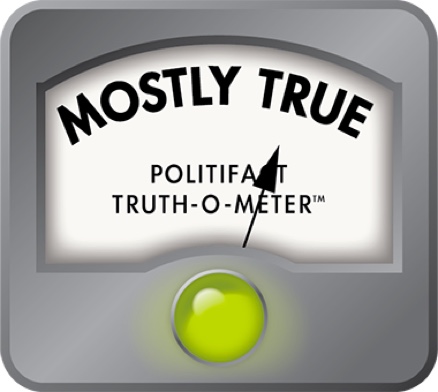
We rate the statement Mostly True.


