
Ebola outbreak: Symptoms, treatment and US aid cuts
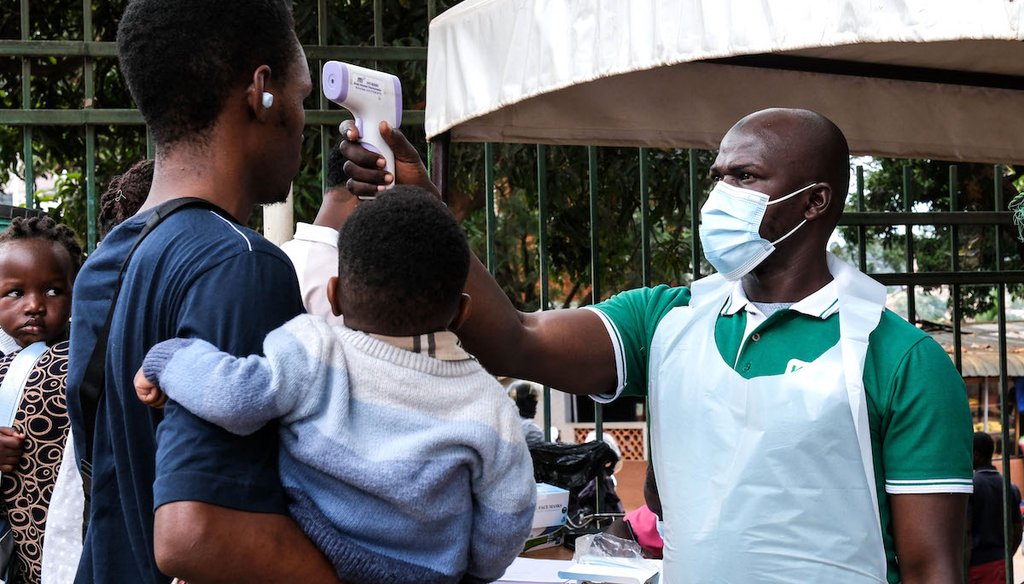
The World Health Organization declared an Ebola outbreak in Africa a “public health emergency of international concern,” but said it did not meet the criteria for a pandemic emergency as of May 17.
The first suspected case was reported in late April, in a Democratic Republic of the Congo healthcare worker. Testing identified the illness as Bundibugyo virus, a rare variant of Ebola disease, in May.
So far, all cases have been reported in the DRC and neighboring Uganda; no cases have been confirmed in the United States.
The 2014 Ebola epidemic that hit west Africa eventually killed more than 11,000 people and sickened over 28,000 across 10 countries, according to WHO estimates. Responders initially failed to recognize the extent of the outbreak and didn’t take sufficient steps to prevent its spread, news reports found.
Here’s what we know about the 2026 outbreak’s origins and treatment, how U.S. foreign aid cuts may affect the response and the misinformation already surrounding it.
Where is this happening?
After that first case, a hospital in the Democratic Republic of the Congo’s remote Ituri province reported a cluster of severe illnesses affecting healthcare workers in early May. Initial samples tested negative for Ebola virus, but by May 15, eight out of 13 samples tested positive and five were inconclusive.
The illnesses were identified as the rare Bundibugyo strain, one of the four types of viruses that cause Ebola disease in people. Tedros Ghebreyesus, the WHO’s director general, told The New York Times that the samples initially tested negative because the equipment could only detect the Zaire species (the only type of Ebola for which a licensed vaccine exists). Although there have been nearly 20 Ebola outbreaks in Congo since 1976, this is only the third time the Bundibugyo virus has been reported.
Ebola is caused by a group of lethal viruses called “orthoebolaviruses” that can transmit from animals to humans and cause fever, fatigue and extensive internal and external bleeding. The viruses are found primarily in sub-Saharan Africa.
The DRC has 10 confirmed cases, 336 suspected cases and 88 deaths. There are two confirmed cases in Uganda, including one death, in people who traveled from the DRC.
To date, no cases of Ebola disease stemming from this outbreak have been confirmed in the United States, the Centers for Disease Control and Prevention said, calling the overall risk to the American public and travelers low. Local health authorities in the DRC and Uganda are conducting investigations to identify infected people and their contacts to prevent further transmission. The CDC has travel health notices in place for the DRC and Uganda.
How fatal is this Ebola strain? Is there a vaccine?
Bundibugyo virus disease is a severe and often fatal form of Ebola, typically originating in fruit bats, the WHO says. Once transmitted to humans, the infection can spread through direct contact with blood, secretions or other bodily fluids.
The incubation period ranges from 2 to 21 days, and people are usually not infectious until they have symptoms, including fever, fatigue, muscle pain, headache and sore throat. As the illness develops, patients may experience gastrointestinal symptoms, such as vomiting and abdominal pain, organ dysfunction and, in some cases, hemorrhaging.
Historically, Bundibugyo virus has death rates ranging from 25-50%, according to the CDC.
There is no approved vaccine for the virus or specific, targeted antiviral medications. Treatment typically consists of supportive care, with early, intensive intervention shown to significantly improve survival rates.
Are U.S. funding cuts affecting Ebola prevention and response?
President Donald Trump dismantled the U.S. Agency for International Development in 2025, cutting billions in global health aid and funding for the CDC, the country’s leading public health agency. USAID played a critical role in responding to the 2014 Ebola outbreak.
Health researchers and international officials are concerned about how the cuts might affect Ebola prevention, spread and response.
U.S. foreign spending on global health initiatives such as food distribution, maternal health and HIV/AIDS medication dropped by nearly 57% after Trump shut down USAID, cut smaller aid programs and pushed Congress to rescind previously-approved foreign assistance, preliminary data shows.
The WHO’s public health emergency designation — intended to ramp up surveillance and infection prevention, enhance preparedness in bordering countries, and spread awareness in the international community — came about a day after public health officials in Africa announced there was an outbreak, with hundreds already infected and dozens dead.
“We’re just hearing about this now? That makes no sense. Those (case) numbers take weeks to accumulate,” said Dr. Ashish Jha, who served as the White House COVID-19 response coordinator under the Biden administration, after news of the outbreak broke. Trump withdrew the U.S. from the WHO in 2025.
Dr. Craig Spencer, an emergency medicine physician who survived Ebola in 2014 and treated patients during the COVID-19 pandemic, told CBS News that the U.S. doesn’t have the capacity to respond quickly to global outbreaks. He said he believes it’s possible USAID’s shutdown is connected to the outbreak announcement’s delay.
“The CDC would have been on the ground at a moment’s notice, maybe even before a moment’s notice, of a new outbreak of Ebola because we were in a bunch of countries,” Spencer said.
When he was leading the Department of Government Efficiency in 2025, Elon Musk said the agency “accidentally” canceled U.S. support for Ebola prevention but said the funding had been “restored” and there was “no interruption.” Public health experts, however, have said the original funding has not been fully restored, citing a lack of funds to support testing and screenings in Uganda in 2025, and that many of USAID’s high-risk outbreak specialists were pushed out of the agency and not rehired.
Congo is Africa’s second-largest country by land area and faces challenges in responding to disease outbreaks because of bad roads and long distances, health officials say.
The WHO said it released $500,000 to support the response to the outbreak, and Africa’s leading public health agency said it mobilized $2 million, but added that’s a small fraction of urgently needed funds.
Ebola long a topic of false claims and conspiracy theories
In 2014, distortions about the Ebola outbreak earned PolitiFact’s Lie of the Year. Some of those falsehoods reemerged as the WHO made its emergency declaration.
Within hours of the announcement, social media posts, some from prominent conservative commentators, spread claims that Ebola was created in a lab, that samples were “smuggled” into the U.S. or that the media was “ramping up” coverage to promote mail voting for the U.S. midterms. One post called the WHO a “terrorist organization,” claiming it knew the hantavirus cruise ship outbreak “was too weak to cause a global pandemic” so it “moved to Ebola.”
None of these allegations are true.
This Ebola outbreak, which is new and rapidly evolving, has killed nearly 90 people so far and sickened hundreds more. News reports are sharing information from the situation on the ground, and there is little information about how the first person contracted the virus. There is no evidence that people dying from Ebola in Africa has anything to do with voting by mail in the U.S.
Dr. Céline Gounder, an internist, infectious disease specialist and epidemiologist and KFF Health News editor-at-large, wrote that her social media monitoring account surfaced “640 Ebola-related videos across TikTok, Instagram, and YouTube — totaling over 68 million views” within 48 hours of the first confirmed Ebola reports on May 15. A separate search, she said, with disinformation keywords such as “ebola conspiracy,” “ebola bioweapon,” “ebola cure” and “ebola cover up” returned 50 videos and 2.6 million views in the same period.
“Every new outbreak triggers the same disinformation playbook,” Gounder said. “The pathogen changes. The script does not.”
RELATED: PolitiFact’s coverage of Ebola


