
Misleading GOP Attacks Over Taxes on Tips, Overtime, Social Security
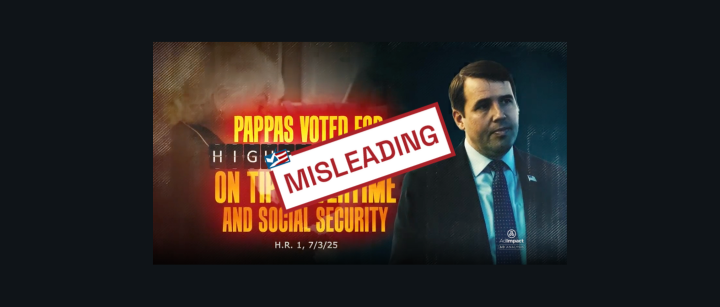
In congressional races around the country, Democrats find themselves under attack in political ads for allegedly opposing the popular tax cuts for tips, overtime and older Americans that were part of Republicans’ One Big Beautiful Bill Act.
While the ads warn that the Democratic candidates opposed or would do away with those tax cuts, many of the candidates themselves say they support those particular provisions.
Not a single Democrat in either the House or Senate voted in favor of the OBBBA, which was signed into law by President Donald Trump on July 4, 2025. And the law did cut — though didn’t completely eliminate — taxes on tips, overtime pay and Social Security through 2028.
Those provisions enjoy bipartisan public support.
But many of the candidates facing these attacks say they voted against the OBBBA for other reasons — chiefly that overall tax cuts were skewed to the wealthy, and that it cut funding to Medicaid and reduced spending on federal food benefits. Many Democrats say they aren’t opposed to the bill’s tax cuts for tips, overtime and older Americans. Some have even said they would work to make them permanent.
Even before the OBBBA was being considered, then Vice President Kamala Harris said in August 2024 that she supported the elimination of taxes on tips for hospitality and service workers.
The No Tax on Tips legislation that was ultimately folded into the OBBBA enjoyed bipartisan support, and was passed by the Senate 100-0. When introducing another bill to clarify that no tax on tips would also apply to automatic gratuities, such as those added by restaurants when serving large parties, Democratic Sen. Ruben Gallego called the no tax on tips provision in the OBBBA “shamefully short term.”
And Democrats have proposed legislation — the You Earned It, You Keep It Act — that would permanently eliminate federal taxes on Social Security, and pay for it by expanding the Social Security payroll tax to earnings above $250,000 a year.
In other words, opposition to the OBBBA doesn’t necessarily translate to an opposition to the bill’s tax cuts related to tips, overtime pay or Social Security.
These provisions — which all expire after 2028 — provide tax deductions up to certain limits; a deduction reduces the total income subject to taxes. The overtime measure applies to the extra 50% income earned on time-and-a-half overtime, up to a limit. The Tax Policy Center estimated that “3 percent of taxpayers benefit from the tips deduction, with an average tax reduction of about $1,480 among those who benefit, and that 10 percent of taxpayers benefit from the overtime deduction, with an average tax reduction of about $1,200.”
The provision aimed at Social Security is a tax deduction, too — $6,000 for those age 65 and older, whether they get Social Security benefits or not, and it phases out for those earning $75,000 or $150,000 for couples filing jointly. The Tax Policy Center found that the deduction “would benefit fewer than half of older adults,” with seniors earning $80,000 to $130,000 benefiting the most. They get an average tax cut of about $1,100, TPC said, in 2025.
Texas Senate Race
One example of this midterm messaging is an ad in Texas from the campaign of Republican Ken Paxton that claims his Democratic opponent, James Talarico, “backs higher taxes on working families, $3,000 a year. Taxes on your tips, your overtime, even Social Security.” Talarico, a state legislator, was not in Congress when the One Big Beautiful Bill Act passed in July 2025. But he opposed it — saying its tax cuts disproportionately benefited billionaires.
Regarding the claim that Talarico “backs higher taxes on working families, $3,000 a year,” that’s a reference — according to the ad’s footnotes — to a Tax Foundation estimate in February that taxpayers would see a nearly $2,300 average tax cut due to the OBBBA in 2026, while business tax cuts would save $1,541 on average.
The lion’s share of the tax cuts in the OBBBA were the result of permanently extending individual tax cuts first passed in the 2017 Trump-backed Tax Cuts and Jobs Act. Those provisions were set to expire at the end of 2025.
But the ad assumes Talarico opposes all of the tax cuts in the OBBBA. He does not.
In a campaign event in Arlington in August, Talarico said, “It’s time to repeal the big ugly bill’s tax breaks for the top 1% and give that $1 trillion to the middle class in the form of a cost of living tax cut.” He often frames the OBBBA as a boon for billionaires.
That’s in line with the mainstream Democratic position. As a presidential candidate in 2024, Harris proposed an economic plan that focused on cutting costs and “cutting taxes for more than 100 million working and middle-class Americans.” Specifically, Harris promised that “no one earning less than $400,000 a year will pay more in taxes,” which would have required her to extend the Trump tax cuts to at least that level.
As we’ve written, each party has misleadingly emphasized only certain aspects of the law, and Talarico’s emphasis on its benefits to billionaires ignores that the OBBBA benefited all income groups on average. According to the Tax Foundation, the extension avoided a tax hike on an estimated 62% of tax filers in 2026.
But it’s also true that the biggest tax gains went to the top earners.
Estimates from the Tax Policy Center last year showed that the average tax cuts by income group in 2026 ranged from $150 for households earning less than about $35,000 to $21,000 for households earning nearly $500,000 to a little more than $1 million.
Factoring in the bill’s spending cuts lowers the benefits for low-income households. In a July 8, 2025, report on the “total value of the legislation,” the Penn Wharton Budget Model found that the OBBBA largely benefits wealthy taxpayers.
“On a conventional basis, households in the first income quintile lose about $885 in 2030, reflecting net reductions in taxes and transfers, including cuts to Medicaid and SNAP,” the report said, referring to the Supplemental Nutrition Assistance Program, which was formerly known as food stamps.
“As spending cuts deepen over time, lower income households come out worse off,” the Penn Wharton Budget Model report said. We wrote more about that report in fact-checking an ad that attacked Georgia Sen. Jon Ossoff over his vote against the OBBBA.
As for the ad’s claim that Talarico supports higher taxes on “tips, your overtime, even Social Security,” Talarico’s campaign said he specifically supports provisions of the OBBBA that cut taxes for the middle class, including taxes on tips, overtime pay and Social Security.
Of the estimated $3,813 overall average tax savings in 2026, about $450 is attributed to the “no tax on” tips, overtime and Social Security provisions, Garrett Watson, vice president of federal tax policy at the Tax Foundation, told us.
“This ad is a lie,” Talarico campaign spokesperson JT Ennis told us via email. “James was proud to vote for the largest property tax cut in Texas history and has consistently voted to cut taxes for working Texans.”
North Carolina Senate Race
In North Carolina, an ad from No Going Pack PAC Inc. says, “North Carolina seniors earned their Social Security and Medicare, but Roy Cooper supported higher taxes on Social Security, hitting seniors earning under $75,000.” If Cooper is elected, the ad says, “he’ll tax your Social Security.”
No Going Back PAC is a newly formed super PAC with ties to another super PAC, MAGA Inc., which is affiliated with President Donald Trump. Cooper, the former Democratic governor of North Carolina, faces former Republican National Committee chair Michael Whatley in a race to fill the Senate seat occupied by outgoing Republican Sen. Thom Tillis.
An ad from the Whatley campaign — being run on streaming services — similarly claims that “Cooper backs higher taxes on tips and overtime, and even higher taxes on Social Security.”
Although the No Going Back PAC ad specifically warns a repeal of the Social Security tax cuts in the OBBBA would specifically hurt “seniors earning under $75,000,” as we’ve written before, many seniors below that income level already do not pay federal income taxes.
According to the White House’s Council of Economic Advisers, 64% of seniors age 65 and over who receive Social Security income already receive exemptions and deductions that exceed their taxable Social Security income. As the Bipartisan Policy Center noted in an article last year, “The increased standard deduction in OBBB means that many older Americans with low income will not receive any benefit from the additional deduction.”
Cooper never served in Congress, so he didn’t vote on the OBBBA. But he has said he opposed it. “It is amazing to me that people like my opponent, Michael Whatley, cheer on this One Big Beautiful Bill when what it did was to take away people’s healthcare in order to fund tax breaks for billionaires,” Cooper said at a press conference on Oct. 5.
But importantly, he has repeatedly said he doesn’t oppose the provision aimed to cut Social Security taxes.
“These attacks are false,” a spokesperson for the Cooper campaign told us via email. “Roy Cooper supports eliminating taxes on Social Security, voted to protect the Social Security tax exemption in North Carolina and cut taxes for working families and seniors.”
According to his campaign, Cooper also supports eliminating taxes on tips and overtime pay.
New Hampshire Senate Race
In New Hampshire, another ad from No Going Back PAC attacks Democratic Rep. Chris Pappas — who is now vying for a Senate seat — as a tax-raiser, saying, “Pappas voted against cutting taxes on tips, overtime, and Social Security. $4,600 in higher taxes on New Hampshire families.”
Pappas voted against the OBBBA in the House. He said he voted against the legislation because the cuts to the Supplemental Nutrition Assistance Program and Medicaid were too extreme and risked causing the closure of health centers.
At the time, Pappas told Fox News, “I support targeted tax cuts for working people, for our small businesses and to make sure we are targeting that relief to the people that need it, not to billionaires, to the biggest corporations.”
Pappas’ campaign said he supports cutting taxes on tips, overtime and Social Security. Indeed, he co-sponsored bipartisan legislation that sought to permanently cut most taxes on tips. As we said, the tax cuts on tips in the OBBBA are set to expire in about two years.
Pennsylvania’s 7th House District
Numerous Democratic candidates for the House are facing the same type of attack ads. For example, in Pennsylvania, an ad from Safety and Affordability PAC claims Democrat Bob Brooks “wants to keep higher taxes on overtime pay and Social Security benefits. Families, firefighters, nurses, and seniors would see their taxes go up.”
Brooks, president of the Pennsylvania Professional Fire Fighters Association, is running in Pennsylvania’s 7th Congressional District against Republican incumbent Rep. Ryan Mackenzie.
Brooks’ campaign pointed us to a Fox News story in June in which a spokesperson for his campaign said the Democrat “ran into burning buildings for 20 years [and] knows what hard work is, and he knows that first responders deserve to keep more of their hard-earned money.”
That Fox News story cites a May interview in which Brooks claimed that most firefighters didn’t benefit from the overtime tax cut. In that story, a Brooks campaign spokesperson said Brooks supports “no tax on overtime” and “no tax on tips.”
Brooks hasn’t served in Congress, so he couldn’t vote on the OBBBA.
Editor’s note: FactCheck.org does not accept advertising. We rely on grants and individual donations from people like you. Please consider a donation. Credit card donations may be made through our “Donate” page. If you prefer to give by check, send to: FactCheck.org, Annenberg Public Policy Center, P.O. Box 58100, Philadelphia, PA 19102.


