
Hegseth blasts ‘Biden initiative’ Trump signed into law
Defense Secretary Pete Hegseth is on a mission to rid the military of “woke,” which he said includes the Women, Peace and Security program.
Hegseth said April 29 that he “proudly ended” the program, describing it on X as “yet another woke divisive/social justice/Biden initiative” and a United Nations program “pushed by feminists and left-wing activists.”
This morning, I proudly ENDED the “Women, Peace & Security” (WPS) program inside the @DeptofDefense.
WPS is yet another woke divisive/social justice/Biden initiative that overburdens our commanders and troops — distracting from our core task: WAR-FIGHTING.
WPS is a UNITED…
— Pete Hegseth (@PeteHegseth) April 29, 2025
Hegseth’s post received a community note that said the law passed in 2017 during the first year of the first Trump administration “and had significant Trump support.”
Hegseth challenged that in a subsequent X post: “The woke & weak Biden Administration distorted & weaponized the straight-forward & security-focused WPS initiative launched in 2017.”
Sign up for PolitiFact texts
We found that the program did not significantly change from President Donald Trump’s first presidency to President Joe Biden’s tenure. The Biden administration used some words and phrases in program plans that a Trump plan did not use, such as “LGBTQI+” and climate change, but the program goals remained the same.
The goal of the program Hegseth targeted is to include women’s perspectives on security. It involves several agencies, not just the Defense Department. Despite Hegseth saying he was ending the program, he later said his department will execute the minimum activities required by law. A State Department spokesperson told PolitiFact that the program will continue.
Valerie Hudson, a professor of international affairs at Texas A&M University, said the women, peace and security program does not fit within the Trump administration’s usual criticism of diversity, equity and inclusion measures — one of his executive orders said people should be hired based on skills, and not DEI mandates. When the government takes what women know into account, “you get better operations on the ground,” Hudson said.
Her graduate students wrote a 122-page paper examining the program from 2000 to 2025. The program does not identify women as a minority and “identifies quite the opposite, that women make up an equal amount of the global population as men, and that as such their interests must be represented at every level of decision-making,” the paper says.
Trump, Noem and Rubio backed Women, Peace and Security program in 2017
The program’s origins predate Trump. In 2000, the U.N. Security Council, of which the U.S. is a member, passed Resolution 1325 on women, peace and security, reaffirming women’s role in the prevention and resolution of conflicts and stressed their equal participation to promote peace and security.
Secretary of State Hillary Clinton kicked off the first National Action Plan for the U.S. in 2011, and the Obama administration released an updated plan in 2016.
In 2017, Sen. Jeanne Shaheen, D-N.H., introduced the Women, Peace and Security Act in the Senate and Rep. Kristi Noem, R-S.D., now Trump’s Homeland Security secretary, introduced the House bill.
The law, which Trump signed Oct. 6, 2017, said the program would “promote the meaningful participation of women in all aspects” of overseas conflict prevention, management and recovery and would be implemented at the Defense, Homeland Security and State departments and the U.S. Agency for International Development.
The Trump administration published its implementation strategy in June 2019, and Trump’s eldest daughter Ivanka Trump promoted it. It said, “The Trump Administration is committed to advancing women’s equality, seeking to protect the rights of women and girls, and promoting women and youth empowerment programs.”
Prominent members of Trump’s second-term administration championed the bill. Secretary of State Marco Rubio cosponsored the Senate version while a senator in 2017 and celebrated the bill eight years later in his new capacity. At the April 1 International Women of Courage awards reception, Rubio said it was “the first law passed by any country anywhere in the world focused on protecting women and promoting their participation in society.”
Biden administration used different phrases in women, peace and security plans
When we asked the Defense Department for evidence that the program was a “Biden initiative,” a spokesperson echoed Hegseth’s language from his X post. When we contacted the White House, a spokesperson pointed to language in two Biden administration program documents.
-
A Biden White House fact sheet about the 2023 Women, Peace and Security Strategy and National Action Plan said the administration was “committed to addressing the gendered impacts of the climate crisis.” It said that since 2021, the State Department and USAID implemented programs “to support women environmental defenders, promote gender-sensitive approaches to environmental justice, and elevate women’s participation in environmental policy development and decision-making.”
-
The administration’s 2023 plan said, “We will take an inclusive, intersectional approach in our implementation of (Women, Peace and Security) to enable a more comprehensive, equitable, and context-driven understanding of the drivers and effects of conflict and potential responses.”
We noticed some language differences when we compared the 2023 Biden plan with the 2019 Trump strategy.
The Biden plan used the term LGBTQI+ 10 times. The term wasn’t in Trump’s plan.
The Biden plan calls for investing money to support women adapting to climate change, which is also not in the Trump plan.
The program’s goals (in government speak they call these “lines of effort”) were generally the same in the Trump and Biden administrations.
The Texas A&M graduate researchers found the law led to greater emphasis on gender inclusion, women, peace and security initiatives, training and peacebuilding, but faced criticism for not allocating funding or strong enforcement mechanisms.
The Biden plan shared the same principles as the Trump plan, such as ensuring women’s participation in decision-making, helping U.S. partner nations develop women, peace and security policies, and protecting human rights of women and girls. However, unlike the Trump plan, “the 2023 NAP failed to note specific plans, goals, or outcomes it hoped to achieve,” researchers said.
Experts who have researched the program said Biden didn’t overhaul it.
Kim Hart, director of policy and programs at the Georgetown Institute for Women, Peace, and Security, said the Biden administration identified new challenges, including climate change, that affect women, peace and security. The Biden administration also sought to link the program to other initiatives, such as its national strategy on gender equity and equality,
Hart said these were not substantial changes, and the Biden administration was basing its strategy on the law.
“It is normal that any strategy will reflect the priorities of that administration, but the framework is still the law signed by President Trump and builds on the work done under the previous (Women, Peace and Security) strategy, also developed under the Trump Administration,” Hart said.
Air Force Lt. Gen. John D. Caine, confirmed by the Senate in April as chairman of the Joint Chiefs of Staff, said during an April hearing that the program “really helps us to understand the full spectrum of challenges that are in front of us.”
Our ruling
Hegseth said the government’s Women, Peace and Security program is a “Biden initiative.”
Trump signed the bipartisan Women, Peace and Security Act into law in 2017. It continued under Biden.
Hegseth acknowledged in a subsequent post that Trump signed the law, saying Biden “distorted & weaponized” the program. While Biden-era documents about the program use some different phrases and words than the Trump program, such as “LGBTQI+”, experts said the Biden administration did not significantly overhaul the program.
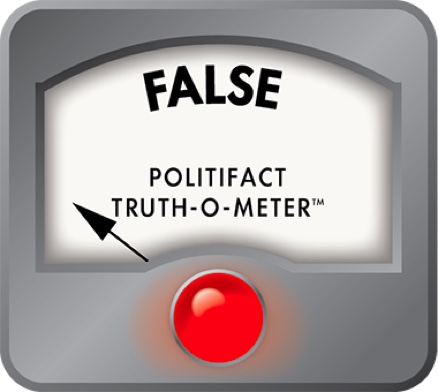
We rate this statement False.
PolitiFact Staff Researcher Caryn Baird contributed to this fact-check.


