
Common Themes in the 2026 Midterms
Over the course of this election, we’ve monitored key toss-up congressional races, fact-checking false claims and distortions of the facts on a host of topics. But some issues have loomed larger than others.
Before the Election Day polls open, here’s a look at the major midterm themes we’ve written about and how both parties have twisted the facts in trying to garner voters’ support.
Inflation and Gas Prices
When inflation and gasoline prices spiked in the summer of 2022, the midterm election airwaves were filled with Republican campaign ads attacking Democrats on those points, as we wrote for our “major themes” story then. With annualized inflation at 3.7% and gasoline prices at $4.27 per gallon the week of Oct. 26 — higher than the metrics when President Donald Trump’s second term began — inflation and gasoline prices are again a centerpiece of the midterm elections, with the party roles reversed.
Most of the Democratic ads blame the war in Iran and Republicans’ support for it, which is a matter for political debate, and not something for fact-checkers.
But the attacks haven’t always been on the mark, as was the case in a North Carolina ad in which Democratic Senate candidate Roy Cooper used an out-of-date quote from his Republican opponent, Michael Whatley, to portray him as out of touch on affordability issues. The economic picture was much different in July 2025 — when Whatley commented on grocery prices, gasoline prices and inflation — than they are today.
And while he isn’t on the ballot (technically), Trump has repeatedly twisted the facts on inflation and gasoline prices while stumping for Republican candidates in the run-up to the midterm elections.
Transgender Issues
In races across the country, Republicans have distorted the facts in claiming that their Democratic opponents support “sex changes” for children or taxpayer funding of such surgeries. Since Labor Day, $162 million has been spent on more than 260 ads containing the words “sex change,” according to our search of AdImpact’s ad-tracking database, with $91.5 million spent in federal Senate races alone. (A few of those ads are Democrats defending themselves from such attacks.)
In fact-checking ads making these claims in three toss-up Senate races, we found several ads that cited politicians’ votes against measures that went beyond prohibiting surgeries.
For instance, ads in Texas cited Democrat James Talarico’s 2023 vote against state legislation that broadly prohibited gender-affirming care for kids — both medications, including puberty blockers and hormone therapy, and surgeries. The bill stipulated that doctors could lose their medical licenses for violating the measure. Talarico, a state representative, voted against the bill, and has said it was “overly broad.” He voted for an amendment that would have restricted the bill to banning surgeries.
It’s worth noting that gender-affirming surgeries typically take place after age 18, according to experts and studies on the prevalence of gender-affirming care.
A 2025 report by the University of California, Los Angeles School of Law’s Williams Institute estimated that more than 2.8 million people in the U.S. age 13 and older identify as transgender — meaning they identify with a gender that doesn’t match the sex they were assigned at birth.
Epstein
More than 350 different TV ads that mention Jeffrey Epstein have been aired since Labor Day, and they came from both sides of the political aisle, according to AdImpact. Numerous ads from Democratic-aligned groups claimed Republican candidates voted against releasing the Epstein files, while candidates from both parties accused each other of taking donations from the late convicted sex offender.
Ads in Alaska, Kansas and Maine, for example, misleadingly claimed Republican Sens. Dan Sullivan, Roger Marshall and Susan Collins voted to cover up the Epstein files. They — and nearly all Republican senators — voted in September 2025 to table a Democratic amendment to the annual defense budget bill. The amendment called for the Justice Department to release the Epstein files. But as we noted in stories about those ads, the Senate in November 2025 passed the Epstein Files Transparency Act by unanimous consent, meaning, of course, that Sullivan, Marshall and Collins supported it.
The bill required the DOJ to release all files related to its investigation of Epstein.
Meanwhile, in races around the country, ads from both sides attempted to link opponents to Epstein through political donations made by alleged Epstein associates — people who were either listed in Epstein’s contact list or are referenced in Epstein emails that have been publicly released. But as we pointed out in several stories, the associates were not charged with crimes, and most had tangential associations to Epstein.
Tax Cuts on Tips, Overtime and Seniors
In hundreds of ads around the country, Republican candidates and the PACs supporting them touted tax cuts for tips, overtime and older Americans that were part of Republicans’ One Big Beautiful Bill Act. Many other ads attacked Democrats who voted against or opposed the OBBBA, claiming they were against those popular tax cuts.
It’s true that not a single Democrat in either the House or Senate voted in favor of the OBBBA, which was signed into law by Trump on July 4, 2025. And the law did cut — though didn’t completely eliminate — taxes on tips, overtime pay and Social Security through 2028.
But many of the candidates facing these attacks say they voted against the OBBBA for other reasons — chiefly that overall tax cuts were skewed to the wealthy, and that the legislation cut funding to Medicaid and reduced spending on federal food benefits. Many Democrats say they aren’t opposed to the bill’s tax cuts for tips, overtime and older Americans. Some have even said they would work to make them permanent.
Data Centers
A rare area of bipartisan agreement among voters is opposition to data centers. But data centers don’t necessarily lead to higher electricity prices, as many ads say and many voters may think.
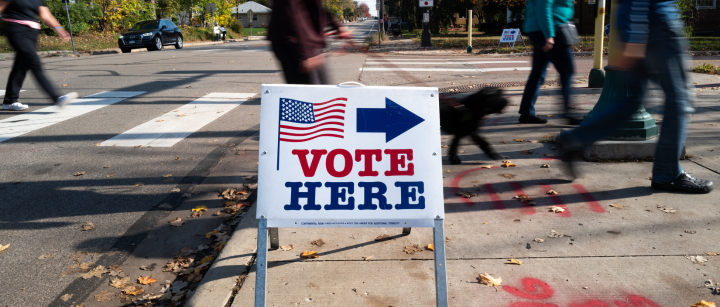
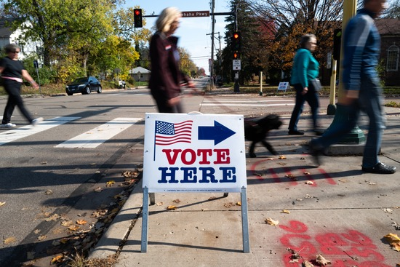 Signage directs people outside an early voting polling place in Minneapolis, Minnesota, on Oct. 28. Photo by Stephen Maturen/Getty Images.
We explored the issue in-depth, with experts telling us there were multiple factors determining whether a data center would raise local electric bills.
“Data centers can put either upward or downward pressure on electricity prices,” Jacquelyn Pless, an energy economist at the University of Toronto, told us. “It depends on how much it costs to serve the new demand, whether utilities can use existing infrastructure more efficiently, and who ultimately pays for any required investments.”
We found that tens of millions of dollars have been spent on midterm ads addressing data centers and electricity prices, with significant spending in Ohio, Texas, Pennsylvania and Michigan, according to AdImpact. In general, experts told us that data centers have contributed to higher prices in Ohio and other Midwestern states, though the facilities aren’t the only reason for more expensive electricity. In Texas, the issue is less clear. Price increases have been modest in the state, which has implemented low-cost wind and solar power that can stave off a large price hike.
Medicare and Social Security
It’s basically guaranteed in federal elections: There will be claims that politicians want to cut, endanger or take away Medicare and Social Security. The 2026 election cycle was no exception.
We saw Democratic ads in Wisconsin, Ohio and New York races for the U.S. House that accused Republican candidates of “gutting Medicare,” voting for “huge cuts to Medicare” and “cheering on Trump’s attack on Medicare” — exaggerated and misleading claims related to the One Big Beautiful Bill Act. The Republican domestic policy law made some changes to Medicare, but they are narrow and affect relatively few beneficiaries.
Some ads also could have been referring to automatic cuts a 2010 law could have triggered indirectly under pay-as-you-go rules. But as Congress has regularly done, it subsequently waived those cuts. A conservative ad attacking Democratic Rep. Chris Pappas in the New Hampshire Senate race used the PAYGO issue to make a convoluted and misleading claim about Pappas voting to “cut Medicare” by hundreds of billions of dollars.
On Social Security, we fact-checked ads from both parties that misrepresented what candidates had said or proposed regarding retirement benefits.
Rural Healthcare
The fate of rural hospitals featured in ads from both sides of the aisle this year. Most of them centered on Trump’s signature domestic policy law, the One Big Beautiful Bill Act.
Ads from Republican outside groups touted the law’s $50 billion rural healthcare fund and heaped praise on GOP senators and representatives who voted for it, saying they “secured millions for our rural hospitals” or passed “the biggest investment ever in rural healthcare.” Other ads attacked Democrats for opposing the bill, claiming they “voted to gut rural hospitals” or opposed “vital funding” for them.
What those ads left out: The law’s cuts to Medicaid are expected to result in rural areas getting much less healthcare funding overall. The nonpartisan health policy research organization KFF estimates the law will reduce federal Medicaid funding for rural areas by $137 billion over 10 years. The cuts to Medicaid, and the potential impact on the healthcare system, were a major reason Democrats opposed the law.
Groups backing Democrats, meanwhile, ran ads in several key races citing specific numbers of rural hospitals that could close due to the law’s cuts. But experts told us that while the law is likely to impact many hospitals’ finances, it’s impossible to predict how many might close as a result.
Communism
In a speech at the first Republican midterm convention, held in September, Trump repeatedly invoked a fear of “communism” as a reason not to elect Democrats. The president said that if Democrats control Congress, it would be run by “crazed” democratic socialists, who he said are really “communists.” Trump has repeatedly referred to “Democrat communists” in midterm rallies since then.
But democratic socialists — who make up a small minority of congressional candidates — are not the same as communists.
Matthew McManus, an assistant professor of political science at Spelman College, told us that it was a “very long-standing trope” for conservatives to refer to democratic socialists as communists. “Conservative discourse intentionally, in many cases, obscures the distinctions between liberals, social democrats, democratic socialists, communists, by trying to conflate them all together and suggest that they’re all part and parcel of the same thing,” he said.
There are few democratic socialists already in Congress — Reps. Alexandria Ocasio-Cortez of New York and Rashida Tlaib of Michigan are two well-known Democratic Socialists of America members. The DSA has endorsed only seven congressional candidates, all for the House.
As for communists, a co-chair of the Communist Party USA told PolitiFact this summer that there are no communists in Congress and that he knows of none running for the House or Senate.
Immigration and Crime
In several key races, Republican-backed ads accused Democratic candidates of supporting soft border policies that led to an increase in crime.
In Ohio, a Republican ad blamed former Sen. Sherrod Brown for a deadly crash in April on an Ohio interstate in which an immigrant was charged with vehicular homicide. But there’s no evidence of any tie between Brown’s votes on immigration, as the ad suggests, and the suspect in this incident.
And in Alaska, an ad from Sullivan featured a mother whose 22-year-old son died from fentanyl and who claimed Democratic Senate candidate Mary Peltola took contributions from “liberals [who] opened our borders to the drug cartels” and then “voted with them against securing our border.” But Peltola was among a handful of Democrats who joined Republicans in support of an unsuccessful bill that sought a return to many of the hardline border policies enacted by Trump during his first term. And Peltola often bucked her party when voting on immigration bills.
Also, while these claims concern crime but not immigration, Cooper in North Carolina faced false and misleading attacks related to a COVID-19 pandemic early-release program to reduce the prison population.
Editor’s note: FactCheck.org does not accept advertising. We rely on grants and individual donations from people like you. Please consider a donation. Credit card donations may be made through our “Donate” page. If you prefer to give by check, send to: FactCheck.org, Annenberg Public Policy Center, P.O. Box 58100, Philadelphia, PA 19102.


