
Fact-checking Ron DeSantis on his property tax plan
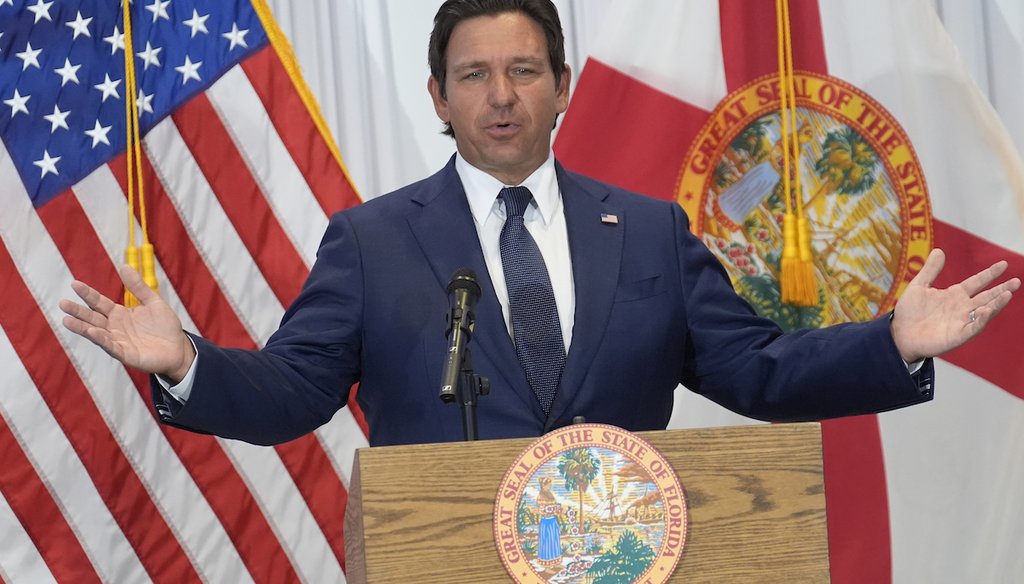
Florida Gov. Ron DeSantis unveiled his long-awaited plan to overhaul the state’s property tax system, saying it would initially eliminate property taxes for 60% of Florida homeowners.
DeSantis’ proposal calls for raising Florida’s threshold for taxing primary residences, or homestead properties, from $50,000 to $150,000 in 2027 and then to $250,000 in 2028.
This would erase property taxes on primary homes assessed at these values or less. For homes valued at more than $250,000, only the amount above $250,000 would be taxable.
Under the plan, the Legislature would create a schedule to raise the exemption to $500,000 and above, eventually eliminating property taxes on primary homes at any value.
Critics said the proposal is a watered-down version of DeSantis’ promise to immediately eliminate all homestead property taxes. DeSantis said the plan has a better chance of passing.
“A $250,000 limit — that eliminates property tax for 60% of Florida homeowners,” DeSantis said May 27. Raising the threshold to $500,000 means 92% of all homes would be tax free, he said.
DeSantis’ figures about how many Florida homeowners would benefit from the plan don’t line up with publicly available state data that breaks down the market values of Florida’s primary homes.
The September 2025 data from the Florida Legislature’s Office of Economic and Demographic Research shows that about 28% of Florida’s homestead properties have a just value (or market value) of $250,000 or below.
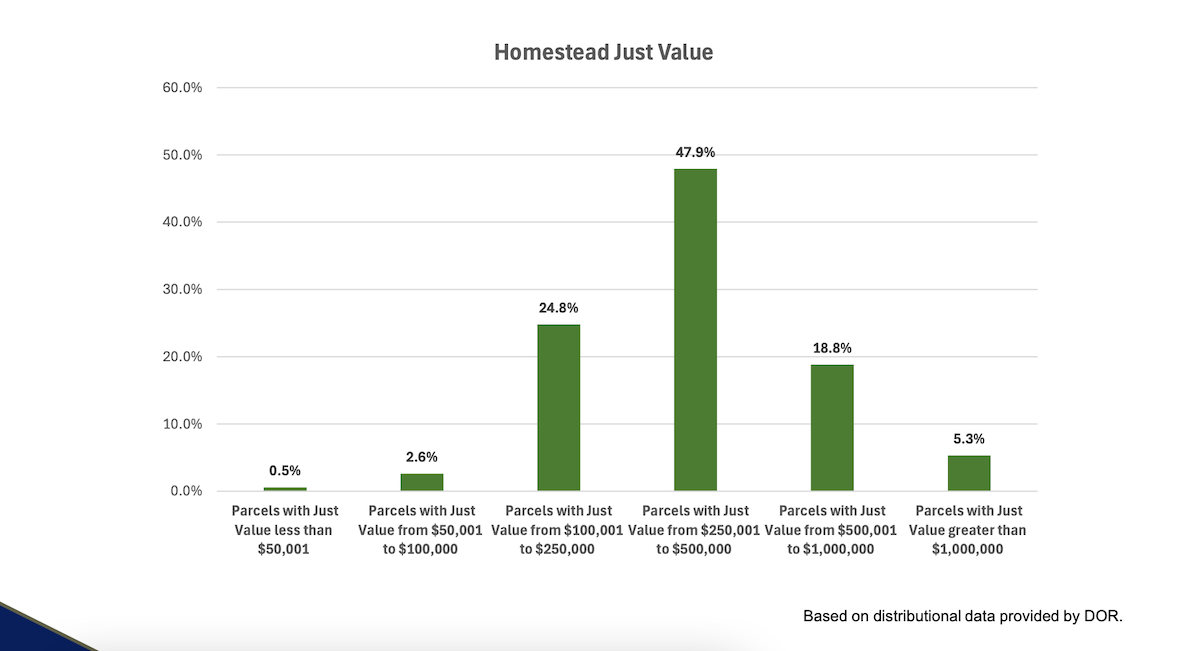
Screenshot via the Florida Legislature Office of Economic and Demographic Research, Homestead Distribution and Benefits report, September 22, 2025.
About 76% of homestead properties are valued at $500,000 or below, although DeSantis said 92% of homes would be exempt from taxes at that price level.
DeSantis’ office did not answer PolitiFact’s request for comment or details about the source of his figures.
Other factors affect housing values
Amy Baker, coordinator at the Office of Economic and Demographic Research, told PolitiFact that Florida’s existing property tax reduction programs and exemptions have to be considered to accurately calculate which residences would no longer pay property taxes under the plan.
Florida voters approved the Save Our Homes program in 1992, which caps annual increases on primary residences’ taxable value at 3%, or the rate of inflation, whichever is lower. Florida residents also can qualify for property tax exemptions available to military veterans, active-duty military, first responders, low-income senior citizens and disabled people.
After those things are calculated, Baker said, the value that is taxable is “just a fraction of the total” value.
Baker said the Office of Economic and Demographic Research will produce an impact report on the governor’s proposal after the Legislature considers it during its June 1 to 3 special session.
She said it’s unlikely there is any public data showing how many primary homeowners would see their property taxes eliminated under DeSantis’ proposal.
DeSantis’ plan still has to pass the Legislature by a three-fifths majority and then be approved by 60% of Florida voters in November.
The center-left Florida Policy Institute estimated that dropping property taxes on all primary homes would cost local governments about $18.5 billion, which breaks down to $7.8 billion for counties, $3 billion for cities and $7.7 billion for school districts.
RELATED: Is DeSantis right that most Florida property tax dollars come from vacation homes, businesses?
RELATED: Will Florida’s Supreme Court have to review lawmakers’ property tax proposal? Only if someone sues
PolitiFact Researcher Caryn Baird contributed to this report.


