
Secondhand vape ‘smoke’ poses health risks, studies show
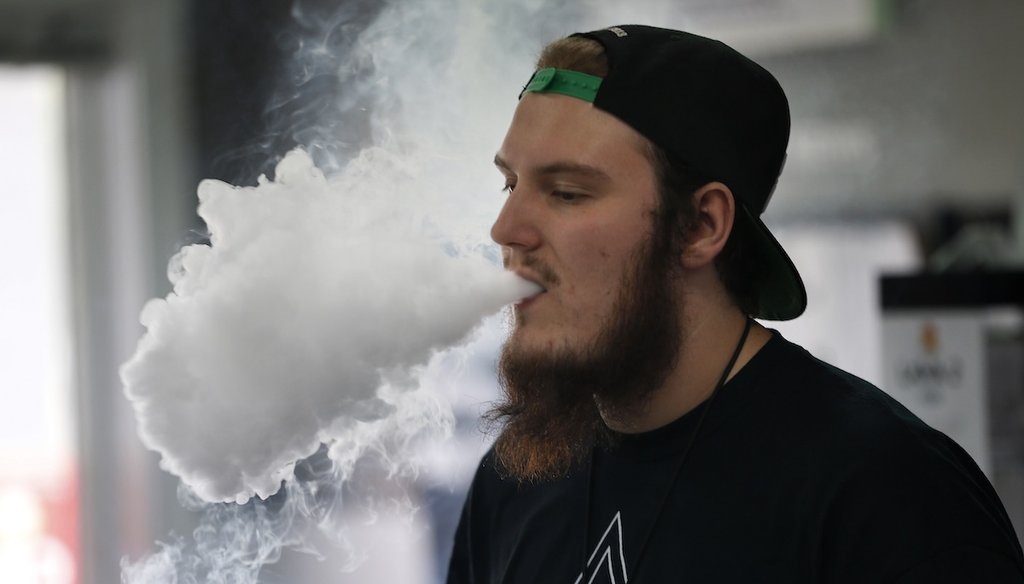
Sometimes, you’re on the train or enjoying a bite to eat on a restaurant’s patio and you catch a whiff of an oddly sweet scent. A moment later, you see a puff dissipate around a nearby stranger and realize: You’re smelling a vape pen or an e-cigarette.
So what exactly are you inhaling? A lengthy list of chemicals, it turns out.
And recent Food and Drug Administration decisions have the potential to increase how often you’re exposed to these substances.
On May 5, under presidential pressure, the FDA for the first time authorized fruit-flavored e-cigarettes for people ages 21 and older. On May 8, the FDA said it would not prioritize cracking down on illegal e-cigarette sales if the companies behind the products were already pursuing agency approval. The decisions followed years of successful vaping industry lobbying that prompted President Donald Trump to change his policy approach to products he’d previously sought to restrict.
During his first presidency, Trump in 2019 tried to force companies to stop selling non-tobacco flavored e-cigarettes, popular among young people. Despite the regulation effort, underage use of unauthorized fruit or candy flavored vape products continued.
Data shows secondhand exposure is rising. In 2018, about 33% of U.S. middle and high school students reported secondhand exposure to aerosol from e-cigarettes. Despite decreases in youth e-cigarette use since then, a 2023 survey found that about 45.2% of students in grades 6 through 12 still reported second hand exposure to aerosols from e-cigarettes.
E-cigarettes first appeared in the U.S. in 2006. They were small, looked like traditional cigarettes and were primarily used by people who wanted to quit smoking, but over time developers modified the liquids to add flavors and the devices to alter the aerosol amounts. The terms e-cigarettes and vapes are generally used interchangeably.
The health risks of secondhand aerosols from vaping are less documented than those from secondhand smoke. But we know there are some. Here’s what research shows.
What’s in vape “smoke”?
When a person inhales from a vape pen, its heating component warms a liquid solution until it becomes aerosolized. These small particles suspended in the air contain many chemicals.
Vaping companies disclose some of the chemicals in liquids or vape pods, but not all.
A 2021 analysis of popular brands of vaping liquids found over 1,000 unknown chemicals in the liquids and subsequent aerosols — along with caffeine and potentially harmful chemicals such as a pesticide and flavorings linked to toxic effects.
Do you have questions about vaping? Send them to me at [email protected].
When selling in the U.S., companies are required to label their products as containing nicotine, the highly addictive chemical stimulant in tobacco plants. States regulate marijuana products, and most states require manufacturers to label when a product contains the cannabis plants’ psychoactive ingredient THC. Most standard e-cigarette liquids also contain propylene glycol, a liquid additive that helps preserve moisture and flavor, and vegetable glycerine, a thickener that creates heavier aerosol clouds. Flavorings add more chemicals.
Because vaping aerosols are created with heat, “Unwanted chemical reactions can produce more chemical substances, such as formaldehyde, acetaldehyde, benzene, toluene, and metals, some of which are harmful to our body,” said Yang Wang, a University of Miami environmental engineering professor.
As for flavored vaping liquids, “Flavoring chemicals safe for ingestion are not necessarily safe for inhalation,” Wang said.
One 2016 study found that vaping using liquids with higher concentrations of flavoring compounds can form more toxic organic compounds called aldehydes, sometimes at levels that exceed federal standards for workplace safety.
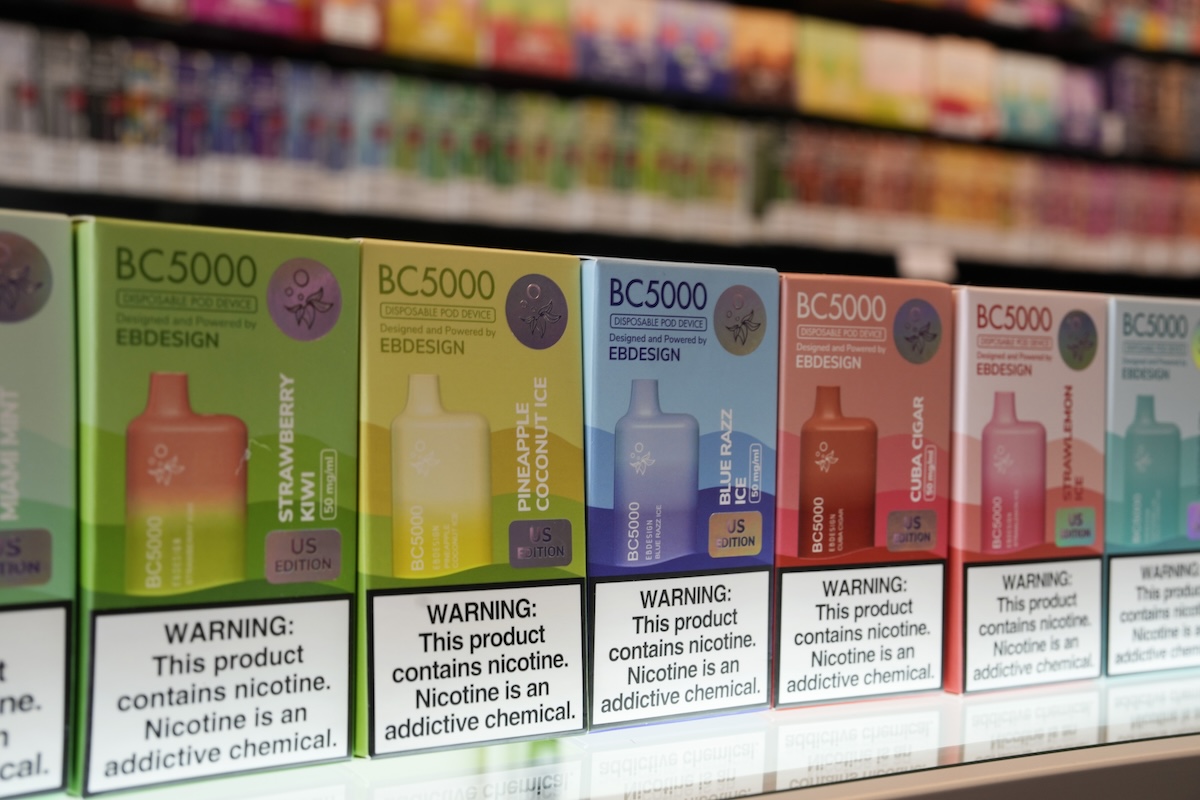
Varieties of disposable flavored electronic cigarette devices manufactured by EB Design, formerly known as Elf Bar, are displayed at a store in Pinecrest, Fla., June 26, 2023. (AP)
What are the risks of secondhand aerosol exposures?
Studies have linked secondhand exposure to vaping aerosols to health issues, but the exact risks remain unknown, researchers told PolitiFact.
That’s partly because the wide variation in vaping products makes it hard to study them and draw widely applicable conclusions, said Terry Gordon, an environmental medicine professor at NYU School of Medicine.
Vaping is still relatively new, and it takes time to conduct rigorous studies on many participants, said Jeannie Rodriguez, a professor at Emory University’s nursing school who studies secondhand e-cigarette aerosol exposure in children.
Different vape pens and e-cigarettes also produce differing aerosol amounts, which means exposure varies. In 2025, a group of researchers including Rodriguzez conducted a review of studies on secondhand e-cigarette aerosol exposure in children. It found these aerosols contain metals and chemicals such as formaldehyde, Rodriguez said.
Rodriguez cautioned that many of the studies researchers reviewed had small sample sizes. Animal studies have also linked secondhand aerosol exposure to respiratory problems, weakened immune systems, stunted growth and poor neurological outcomes, she said.
“This research is still in its infancy,” Rodriguez said.
Some studies have shown negative health effects, though.
A 2022 study found in young adults, secondhand nicotine aerosol exposure was associated with increased risk of bronchitic symptoms and shortness of breath. Another showed secondhand exposure to e-cigarette aerosols was associated with mental health problems — similar to secondhand smoke exposure.
E-cigarette use also increases air pollution in homes, one 2022 study showed. Air pollution — particularly fine particles or PM2.5 — is known to have health risks.
More than one study has found that children exposed to nicotine e-cigarette aerosols secondhand absorb small amounts of nicotine — albeit much less than children exposed to secondhand cigarette smoke, according to a 2024 study’s findings.
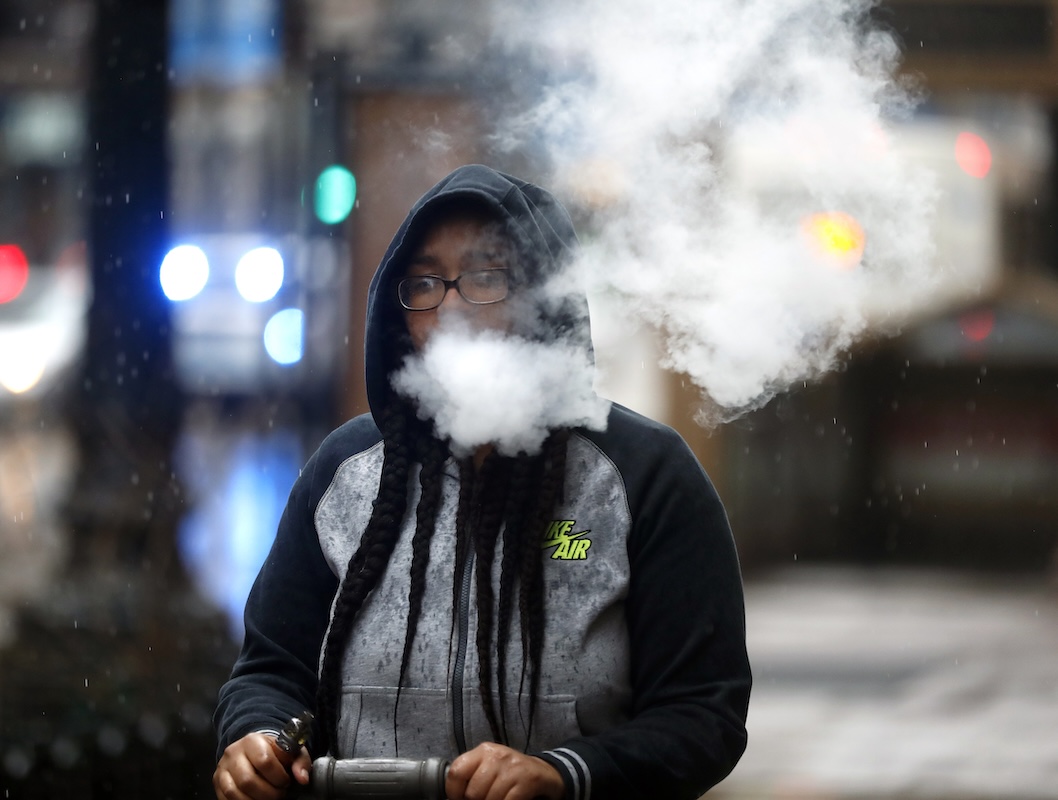
A commuter exhales while smoking an e-cigarette during rain on March 23, 2021, in Chicago. (AP)
What level of exposure is dangerous?
There’s currently no amount of e-cigarette aerosol exposure that researchers consider to be “safe,” but researchers said occasional brief encounters with aerosol likely have fewer negative health outcomes than firsthand use or repeated ingestion of secondhand aerosols at home or work.
“For occasional short-time secondhand exposure, such as at a party or in public transportation, I would not expect clear long-term harm for most healthy adults,” Wang said. “But some people may experience acute irritation, coughing or asthma symptoms.”
The bigger concern, he said, is repeated exposure, especially in places with poor ventilation.
Based on what scientists know now, Rodriguez advised people to minimize vaping aerosol exposure whenever possible.
PolitiFact Researcher Caryn Baird contributed to this report.


