
What is ‘birth tourism’ and how often does it happen?
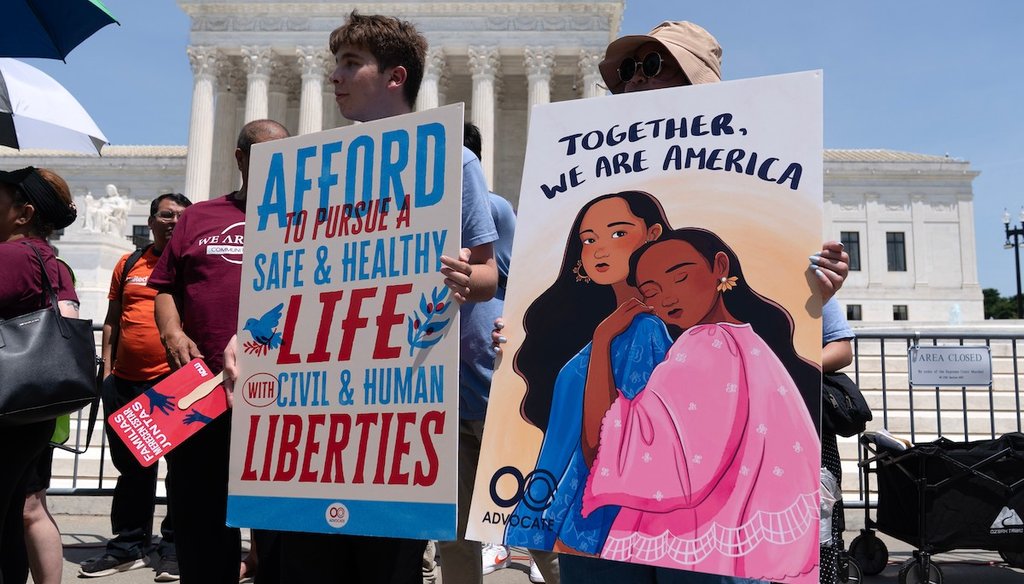
Criticizing the U.S. Supreme Court ruling upholding birthright citizenship, some of President Donald Trump’s allies said having that right has opened the doors to “birth tourism.”
That’s a reference to pregnant women traveling from outside the U.S. to give birth here in order for their babies to gain citizenship.
House Speaker Mike Johnson, R-La., said birthright citizenship has “been grossly abused” through “birthing tourism.” Sen. Lindsey Graham, R-SC, called birthright citizenship a “major magnet for illegal immigration and birth tourism.”
Following the ruling, Trump posted, seemingly in reference to birth tourism, that he wanted to “congratulate President Xi, and the Great Country of China, on their massive Birthright Citizenship WIN!” (We asked the White House about his statement and a spokesperson referred us back to a Trump Truth Social post criticizing the ruling.)
Stephen Miller, White House deputy chief of staff, said on Fox News, “You have to now think very carefully about who you let into your country, even on a temporary basis” because of birth tourism.
The Justice Department vowed to prosecute birth tourism schemes, and has done so in the past. PolitiFact has previously examined questions about the extent of birth tourism and whether wealthy foreign expectant mothers come to Florida and don’t pay their hospital bills. We found that birth tourism exists, but is a tiny slice of annual U.S. births.
Researchers estimate 5,000 to 26,000 babies born annually from birth tourism
It’s unclear how many women come to the U.S. to give birth specifically so their children obtain citizenship. No U.S. agency tracks it.
We can draw limited conclusions from federal data. The Centers for Disease Control and Prevention estimated about 9,500 births to parents who reported a non-U.S. address as their residence in 2024. That number is likely an undercount because people may not self-report.
The Migration Policy Institute, a nonpartisan policy think tank, wrote in April that although that number may be interpreted as a proxy for babies born due to birth tourism, it also includes women who did not necessarily intend to have a baby in the United States.
The Center for Immigration Studies, a think tank that favors low immigration levels, estimated in 2020 — its most recent data available — that there were 20,000 to 26,000 possible births from tourists a year. The Niskanen Center, a think tank, said that was an overcount.
Penn State researchers in June wrote a research brief that found babies born to such tourists ranged from 5,000 to just under 10,000 a year, or 0.3% of births annually, in line with the Migration Policy Institute’s article. (They have submitted a longer paper to a peer-reviewed journal.)
They used 2014 to 2024 data from the National Bureau of Economic Research’s National Center for Health Statistics, which provides a demographic record of all live births in the United States. They defined “birth tourists” as any mother who was reported as foreign-born or unknown and whose usual residence is outside the United States.
Whether the number is 5,000 or 26,000, it is a tiny slice of the 3.6 million births in the U.S. in 2025.
Nicole Kreisberg, the senior author of the study and a Penn State sociologist, sought to research public sentiments about “birth tourists,” such as that they’re wealthy Asian families or low-income Hispanic families attempting to access public benefits.
“Demographic evidence suggests a different pattern,” Kreisberg found.
The majority of such births are to Hispanic mothers, particularly from Mexico. The Mexican mothers’ above-average levels of education do not align with the narrative that they gave birth in the U.S. to access public benefits, Penn State researchers found. The number of such births among Asian mothers remains consistently low. From 2014 to 2024, the figure peaked at 425 in 2018, never exceeding 0.2% of U.S. Asian births.
Obama, Biden and Trump administrations all took steps to prevent, prosecute birth tourism
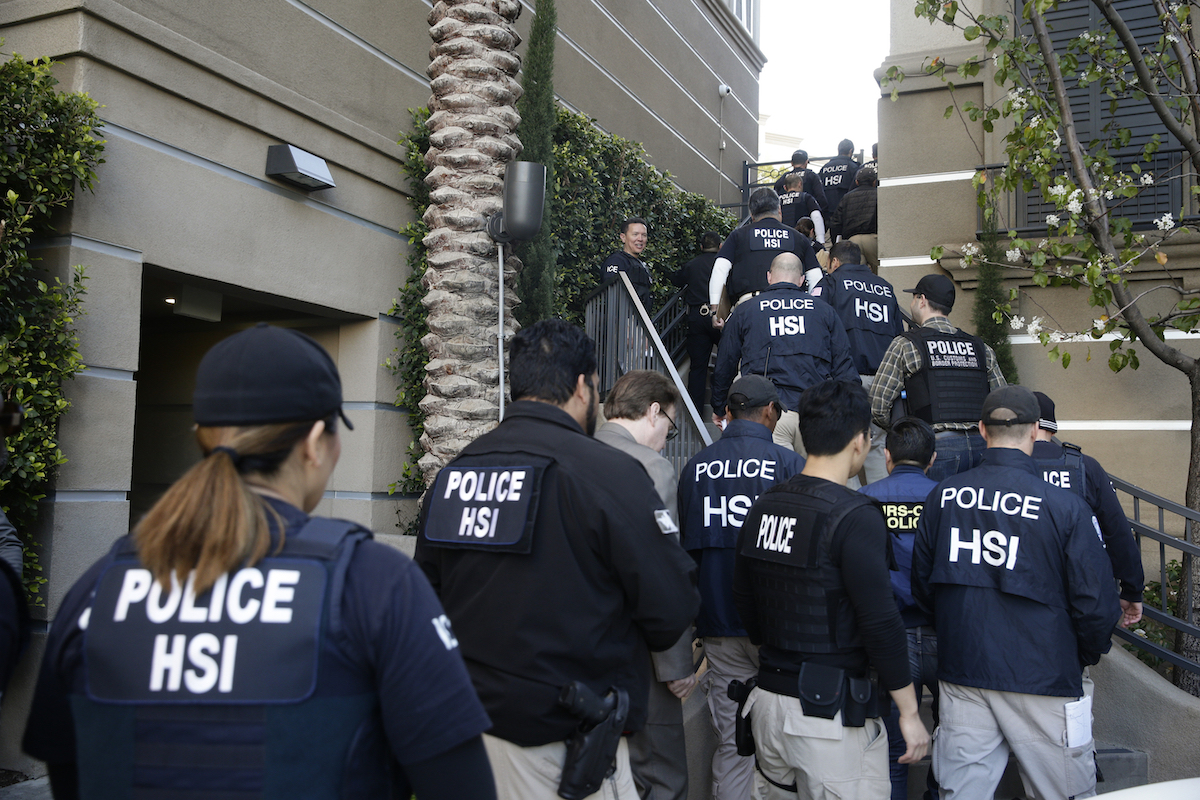
Federal agents enter an apartment complex, March 3, 2015, in Irvine, Calif. where authorities say a birth tourism business charged pregnant women $50,000 for lodging, food and transportation. (AP)
Giving birth on U.S. soil as a foreigner is not a crime. However, it becomes a crime if it involves visa fraud or violations of other federal laws.
U.S. tourist visas cannot be granted “for the primary purpose of obtaining U.S. citizenship for a child by giving birth in the United States,” according to U.S. law. The State Department under Trump has emphasized this rule. Immigration officials can stop pregnant women from entering the country with a tourist visa if the officer thinks she might give birth while visiting the U.S.
Over the past decade, administrations have sought to prevent birth tourism. During the Obama administration, the State Department issued guidance on travel under B-2 temporary visas for medical treatment. While travel for pregnancy-included reasons was permissible, visa-holders had to demonstrate the need for U.S. care, as well as proof they could cover birth-related costs and leave the U.S. shortly thereafter.
In 2020 during the first Trump administration, a State Department regulation allowed overseas consular officers to deny visas for potential birth tourism applicants. The Biden administration tightened travel regulations to Guam and the Northern Mariana Islands amidst increased birth tourism concerns in the regions. Given the islands’ status as U.S. territories, any person born in either place is a U.S. citizen.
In April 2026, U.S. Immigration and Customs Enforcement opened an investigation into birth tourism networks.
Did the Supreme Court address birth tourism?
During oral arguments, Solicitor General D. John Sauer argued that birthright citizenship “has spawned a sprawling industry of birth tourism as uncounted thousands of foreigners from potentially hostile nations have flocked to give birth in the United States in recent decades, creating a whole generation of American citizens abroad with no meaningful ties to the United States.”
But the justices almost entirely ignored the issue in their rulings. Only Justice Clarence Thomas, joined in a dissent by Justice Neil Gorsuch, mentioned it — in passing — within 91 pages.
“All of the other justices acknowledge that the contours of citizenship should not be changed based on questions about this one small group,” said Denise Gilman, co-director of the University of Texas law school immigration clinic.
Chief Correspondent Louis Jacobson contributed to this article.
RELATED: Supreme Court rules against Trump on birthright citizenship, blocking key campaign promise


